
The Green Revolution Reaches Cell Therapy
In the race to develop life-saving cell therapies, one critical consideration has often taken a backseat: environmental sustainability. The biotech industry, particularly cell therapy manufacturing, has traditionally prioritized clinical outcomes and regulatory compliance over ecological impact. But as climate concerns intensify globally, forward-thinking companies are recognizing that medical innovation and environmental responsibility can—and must—go hand in hand.
At Immumem Therapeutics, we believe the future of oncology treatment doesn’t have to come at the expense of our planet. This article explores how the cell therapy sector is embracing sustainability through innovative manufacturing approaches, waste reduction strategies, and supply chain transformations.
The Environmental Footprint of Traditional Cell Therapy Manufacturing
Cell therapy production represents a unique sustainability challenge. Manufacturing processes require stringent clean room conditions, temperature-controlled environments, continuous monitoring systems, and specialized equipment—all demanding significant energy resources. Traditional manufacturing methods also generate substantial waste:
- Single-use plastics from culture vessels, tubing, and bags
- Chemical waste from reagents and cleaning procedures
- Water consumption for processing and cleaning
- High energy usage for temperature control and air filtration
- CO₂ emissions from transportation and cold-chain logistics
With the cell therapy market projected to grow at a CAGR of 36.3% through 2028, these environmental impacts could multiply dramatically without intervention. The good news? The industry is responding with remarkable innovation.
Process Efficiency: The First Step Toward Sustainability
Reimagining Single-Use Technologies
Single-use technologies (SUT) have become standard in cell therapy manufacturing due to their advantages in reducing cross-contamination risk and cleaning validation requirements. Contrary to initial concerns, recent studies show the environmental footprint from plastic SUTs is relatively small compared to the overall manufacturing process.
The key is optimizing how we use these technologies. By designing systems that maximize yield while minimizing material use, we can achieve both clinical and environmental goals.
Innovations include:
- Biodegradable alternatives to traditional plastics
- Recycling programs for non-patient-contact materials
- Smaller-footprint SUT systems with improved efficiency
Streamlining Production Timelines

One of the most effective sustainability strategies is simply making processes more efficient. Extended manufacturing processes mean more days of energy-intensive clean room operation, increased reagent use, and greater waste generation.
Closed, automated systems are dramatically reducing production timelines while improving consistency. For example, next-generation bioreactors can decrease manufacturing time by up to 40% compared to traditional methods, with corresponding reductions in resource consumption and waste generation.
Facility Design: Building Sustainability from the Ground Up
The most progressive cell therapy companies are rethinking facility design with sustainability as a core principle. Allogene Therapeutics’ Cell Forge 1 represents this new approach—a fully electric facility designed to optimize processes while minimizing environmental impact.
Key elements of sustainable facility design include:
- Energy-efficient HVAC systems specifically calibrated for clean room environments
- Smart monitoring technology that adjusts energy use based on production needs
- Water recycling systems that purify and reuse process water
- Renewable energy integration through on-site generation or green energy purchasing
- Modular, flexible manufacturing spaces that adapt to changing needs without requiring new construction
These design elements not only reduce environmental impact but often yield significant operational cost savings. A recent industry analysis showed that sustainable facility design can reduce energy costs by 25-30% compared to traditional approaches.
The Role of Automation and Miniaturization
Robotic Systems: Precision with Purpose
Automation is revolutionizing cell therapy manufacturing while simultaneously reducing its environmental footprint. Robotic systems require less clean room space, operate with greater precision (reducing errors and waste), and can function with lower environmental control requirements than human operators.
When we automate critical processes, we’re not just improving consistency, we’re creating manufacturing environments that use fewer resources per dose produced, which translates directly to sustainability improvements.
Miniaturization: Small Footprint, Big Impact
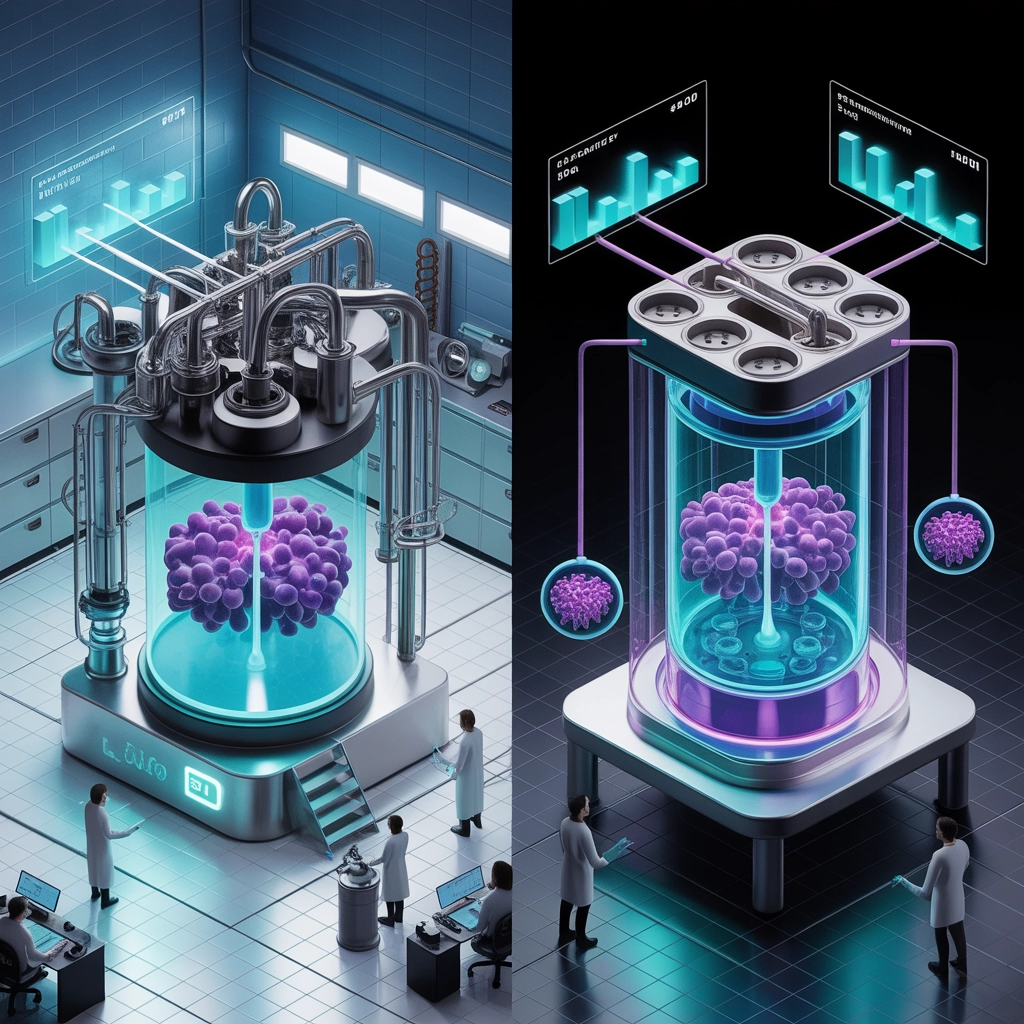
Miniaturized production systems are dramatically reducing the resource requirements for cell therapy manufacturing. Microfluidic platforms and small-scale bioreactors can:
- Decrease clean room space requirements by up to 80%
- Reduce reagent volumes by 50-70%
- Cut energy consumption for temperature control and air handling
These innovations make particular sense for autologous therapies, where each batch is produced for a single patient, but are increasingly being adapted for allogeneic “off-the-shelf” therapies as well.
Sustainable Cell Sources and Reprogramming
The source of cells used in therapy production has significant sustainability implications. Traditional methods often require extensive donor recruitment, multiple collection sites, and complex logistics networks—all with associated environmental costs.
The industry is responding with more sustainable approaches:
- Centralized collection facilities that reduce transportation needs
- Extended cell line viability that maximizes yield from each donation
- iPSC technology that generates virtually unlimited cells from a single source
- Advanced cell expansion methods that increase yield while decreasing resource use
At Immumem Therapeutics, our focus on innovations in cellular engineering aligns with these sustainability goals, allowing us to develop more efficient manufacturing processes with reduced environmental impact.
Waste Management: Reduce, Reuse, Recycle in Bioprocessing
Creative Solutions for Bioprocess Waste
The bioprocessing industry is developing innovative approaches to waste management:
- Plastic waste reduction programs that recycle non-patient-contact materials such as tip boxes, plastic flasks, styrofoam coolers, metals, expired products etc. (e.g.- Conigliaro Industries)
- Reagent recycling systems that purify and reuse certain chemicals such as Xylene, Alcohol, Acetone, Xylene substitutes, Formalin, Isopropyl Alcohol etc. (e.g.- CBG Biotech)
- Waste-to-energy conversion for appropriate biological materials like spent culture media, discarded cells etc. that can be subjected to Microbial Fuel Cells to generate electricity (e.g.- MICROrganic Technologies, Aquacycl, etc.)
- Equipment refurbishment programs that extend the life of capital investments (e.g.- Gentech Scientific, Lighthouse Lab Services, etc.)
- Plant-based plastic lab consumables that reduce both petroleum consumption and greenhouse gas emissions (e.g.- Green Elephant Biotech)
Supply Chain Transformation
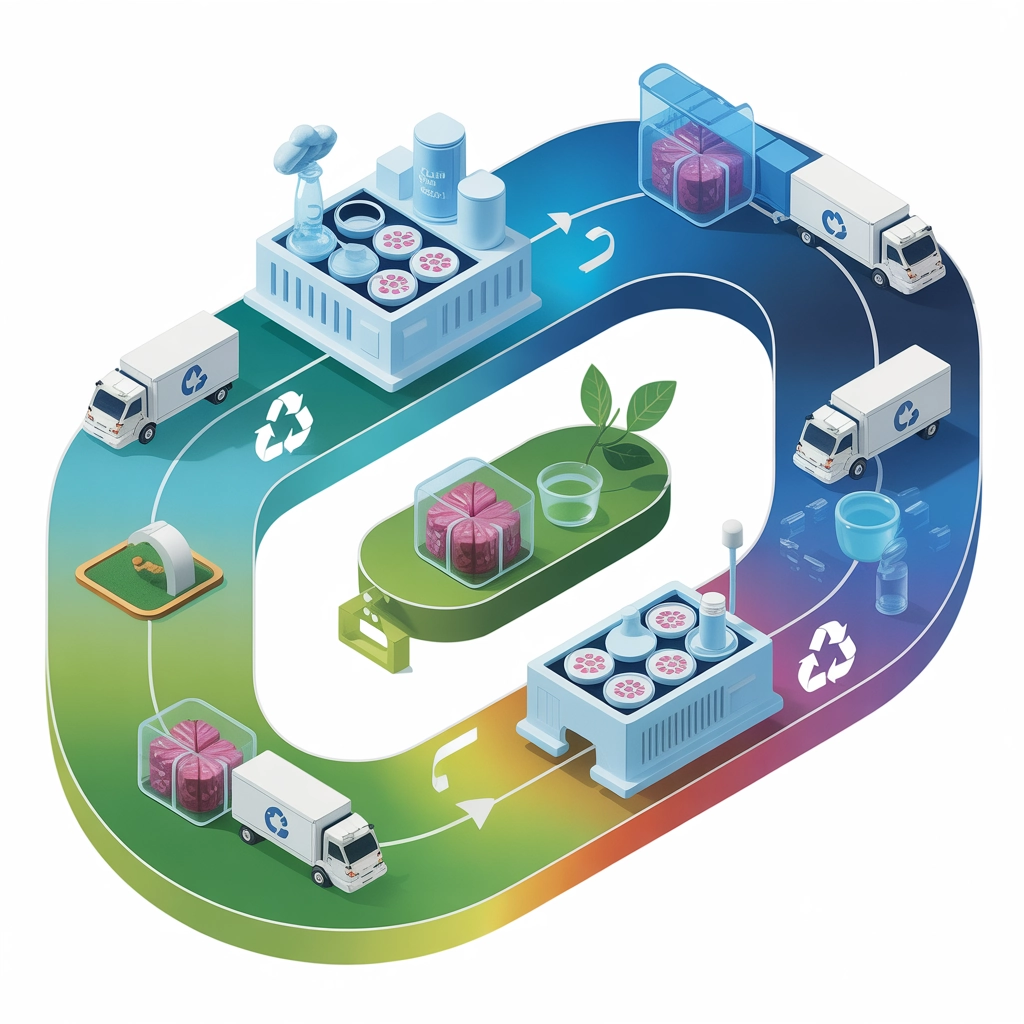
Sustainable cell therapy manufacturing extends beyond the production facility to encompass the entire supply chain. Progressive companies are:
- Localizing supply chains to reduce transportation distances – Pfizer has implemented regional manufacturing hubs in their “Highly Orchestrated Supply Network” to minimize transportation emissions while ensuring reliable delivery of oncology therapeutics.
- Consolidating shipments to minimize cold-chain requirements – Genentech (Roche) has developed an integrated logistics program that combines multiple product shipments along optimized routes, reducing their cold-chain carbon footprint by approximately 20% since 2019.
- Working with suppliers to reduce packaging waste – Amgen has partnered with packaging suppliers to develop recyclable alternatives to traditional styrofoam coolers, implementing plant-based insulation materials that reduced their packaging waste by over 30 tons annually.
- Setting sustainability requirements for vendors and partners – Bristol Myers Squibb has established their “Environmental Sustainability Supplier Code” that requires vendors to meet specific emissions, waste, and water usage targets, with 85% of their key suppliers now participating in their sustainability reporting program.
We’re seeing the emergence of circular economy principles in bioprocessing. Companies are forming partnerships to reuse materials, share resources, and collectively minimize waste across the industry.
The Business Case for Sustainable Cell Therapy Manufacturing
While environmental responsibility is a worthy goal in itself, the business case for sustainable manufacturing is increasingly compelling:
- Cost reduction through energy efficiency and waste minimization – Amgen saved over $21 million annually through their energy efficiency initiatives, including LEED-certified buildings and waste reduction programs that diverted 78% of waste from landfills.
- Regulatory advantage as agencies begin to consider sustainability metrics – Novartis has committed to carbon neutrality across Scope 1 and 2 emissions by 2025, already achieving a 69% reduction versus their 2016 baseline as of 2024. Their sustainability efforts are validated by the Science Based Targets initiative, with a comprehensive roadmap to reach net zero emissions by 2045. The company’s environmental credentials include 97% of sites meeting environmental standards and 96% renewable electricity usage in 2024, positioning them favorably as regulatory agencies increasingly incorporate sustainability metrics into their evaluation frameworks.
- Investor appeal in an era of ESG-focused investment – Johnson & Johnson demonstrates strong ESG credentials through its cell therapy manufacturing innovations and sustainability commitments. J&J’s environmental initiatives include achieving a 20% absolute reduction in facility CO2 emissions, developing 50 megawatts of renewable energy capacity, and implementing comprehensive supplier sustainability requirements with publicly reported goals.
- Talent acquisition as young scientists increasingly prioritize employer values – Genentech has attracted top scientific talent through its comprehensive sustainability commitments, including achieving 100% sustainable electricity at its South San Francisco headquarters and targeting 75% reduction in Scope 1 and 2 emissions by 2029. Their innovative single-use bioprocessing technologies in cell therapy manufacturing, which deliver 15-20% reduction in carbon footprint compared to traditional systems, particularly appeal to next-generation scientists seeking employers that balance cutting-edge science with environmental responsibility.
- Market differentiation in a competitive landscape – Moderna has established digitally-enabled, environmentally sustainable design optimized for mRNA production at their Norwood facility, while their Cambridge Science Center targets LEED Platinum and LEED Zero Energy certifications. Moderna’s manufacturing process eliminates traditional biopharmaceutical cell culture complexity, requiring substantially smaller operations than conventional biologics production that can demand up to 20,000 liters of cell culture. The company has committed to net-zero carbon emissions globally by 2030, implemented renewable energy use since 2021, and requires suppliers to adopt net-zero carbon practices.
A 2024 industry survey found that 78% of biotech investors now consider sustainability metrics in their investment decisions, and 96% of early-career scientists expect their employers to prioritize sustainability and seek mission-driven work aligned with their values.
Looking Forward: The Future of Sustainable Cell Therapy
The convergence of automation, miniaturization, cellular engineering, and sustainable design is creating unprecedented opportunities to reduce the environmental impact of cell therapy manufacturing while improving clinical outcomes.
Future developments on the horizon include:
- AI-optimized manufacturing that continuously improves efficiency
- 3D bioprinting that minimizes material waste while improving cell product functionality
- Ambient-temperature storage solutions that eliminate energy-intensive cryopreservation
- Fully integrated, continuous manufacturing platforms that minimize resource use per dose
These innovations aren’t just good for the planet—they’re essential for making advanced cell therapies accessible to more patients worldwide. By reducing manufacturing costs through sustainability initiatives, companies can help address one of the most significant barriers to cell therapy adoption: price.
Conclusion: A Collective Responsibility
Creating truly sustainable cell therapy manufacturing requires collaboration across the industry. No single company can solve all environmental challenges alone, but each can contribute to a collective effort to reduce our ecological footprint.
At Immumem Therapeutics, we’re committed to advancing oncology treatments while embracing responsible manufacturing practices. By sharing knowledge, supporting industry-wide sustainability initiatives, and incorporating green principles into our processes from the ground up, we’re working to ensure that tomorrow’s breakthrough therapies don’t come at the expense of the planet’s health.
The most exciting aspect of this green revolution in biotech? In many cases, the same innovations that improve sustainability also enhance product quality, manufacturing reliability, and patient access. That’s a future worth investing in—for our patients, our planet, and the promise of cell therapy itself.
For more information about Immumem Therapeutics’ approach to sustainable innovation in oncology, visit our website or follow us on social media for the latest updates.